
Checked out of the hotel. Flight isn’t until 1:30 AM. It’s raining. That’s fine. We got nine days of dry weather for all the sightseeing, so I wasn’t going to complain about rain on the day we were leaving.
The only thing on the agenda: find something to eat before the long wait at Haneda Airport, Tokyo, Japan.
Uber in Japan
Six people means two Ubers. That’s just the reality here: large-capacity cars are rare on the platform. What surprised me was how frictionless it was: same app, same account, everything worked exactly as it does back home.
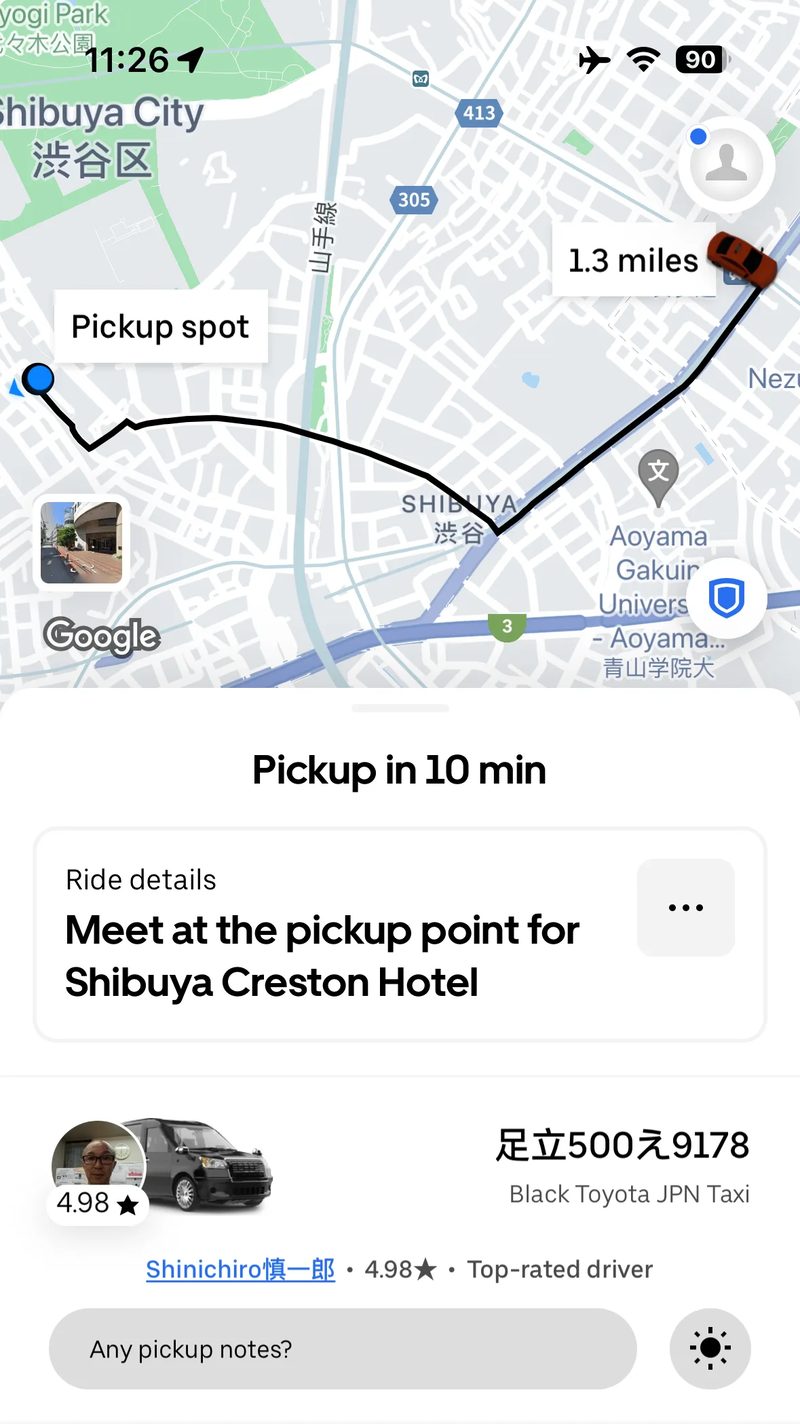
The hotel staff gave us one important note before we got in: don’t touch the door. Don’t open it yourself. The driver handles it: there’s a mechanism, a specific timing. In Japan, you do not help yourself into or out of a taxi. You just sit down. It felt strange the first time. By the second it felt completely normal.
The taxis here are almost all Toyota, specifically the “JPN Taxi,” which I think is both a model name and a branding requirement. Boxy, roomy, quiet. I spotted one Ioniq 5 in the taxi fleet, but it was the exception. Black Toyotas everywhere.
Omakase Sushi at Shibuya Scramble Square
We went back to the Shibuya Scramble Square building in Shibuya, Tokyo, same one as the day before at Shibuya Sky. It’s a good building for this: dozens of restaurants in one place, everyone in the group can split off and eat what they want without a thirty-minute negotiation.
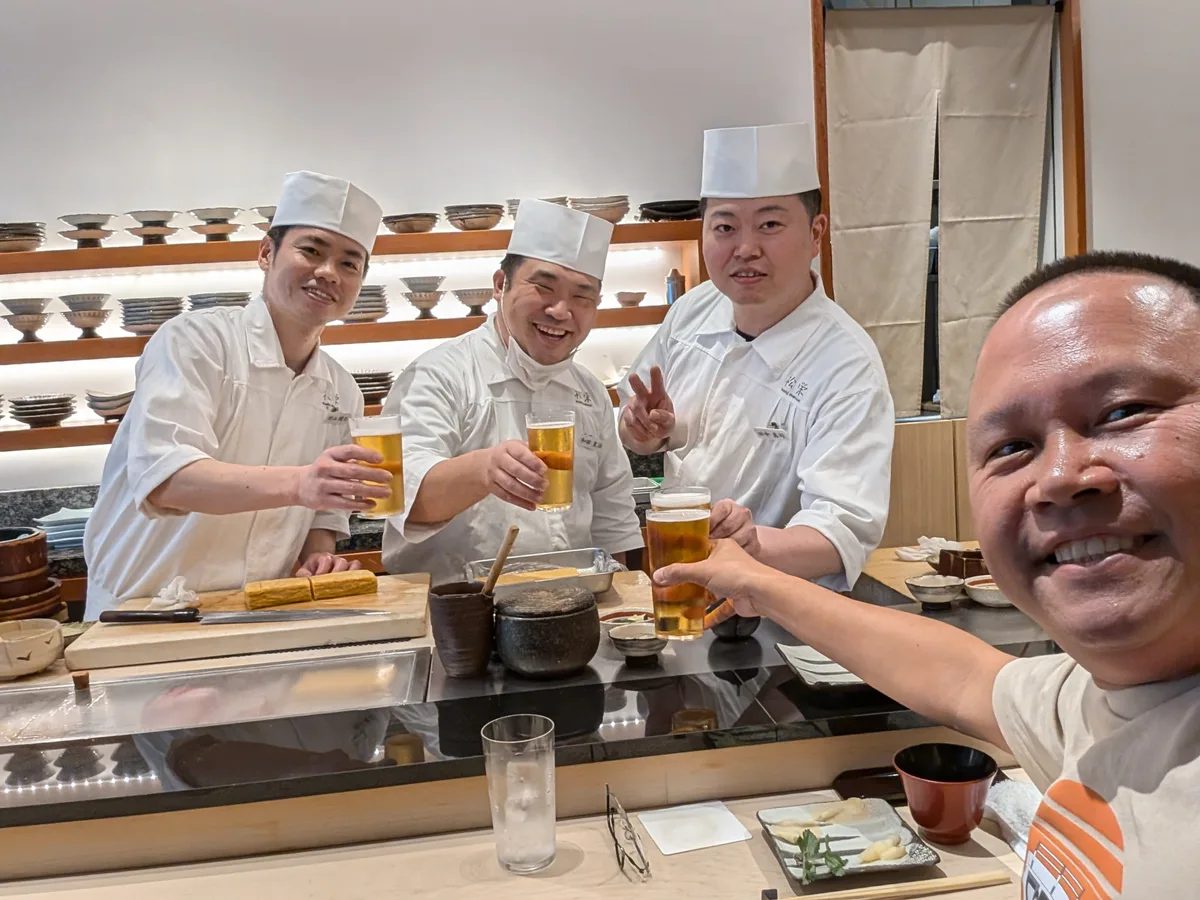
Everyone else found their own spots. I went straight to the sushi counter.
Omakase means “I’ll leave it up to you.” You sit down, you don’t order, and the chef decides what you eat and when. Before I came to Japan, Japanese friends gave me one firm piece of advice: don’t ask for soy sauce, don’t ask for wasabi, don’t ask for anything. Whatever they put in front of you, that’s what you eat. The chef has already seasoned it. Trust the process.
I also ordered Sapporo. Three rounds for me. Two rounds for the chefs, the ones doing the slicing and the ones who weren’t. I wasn’t supposed to tip, but buying beers is technically not tipping, so I found the loophole. Google Translate got us through a full conversation. Those guys were hilarious. Genuinely some of the best people I ate with on this entire trip.
Three rounds of beer, full omakase, two rounds for the chefs: just over a hundred dollars. I would have happily paid double and stayed another hour if we didn’t have a flight to catch. If you love Japanese food, Japan will ruin you for everything else. Nothing else comes close.
To Haneda: The HiAce
For the airport run, the hotel arranged a Toyota HiAce, a full-size van. Ten seats, the whole group, thirteen bags in the back. I kept thinking: why don’t we have these in America? An HiAce as a daily driver would be so practical. But that’s not the point.
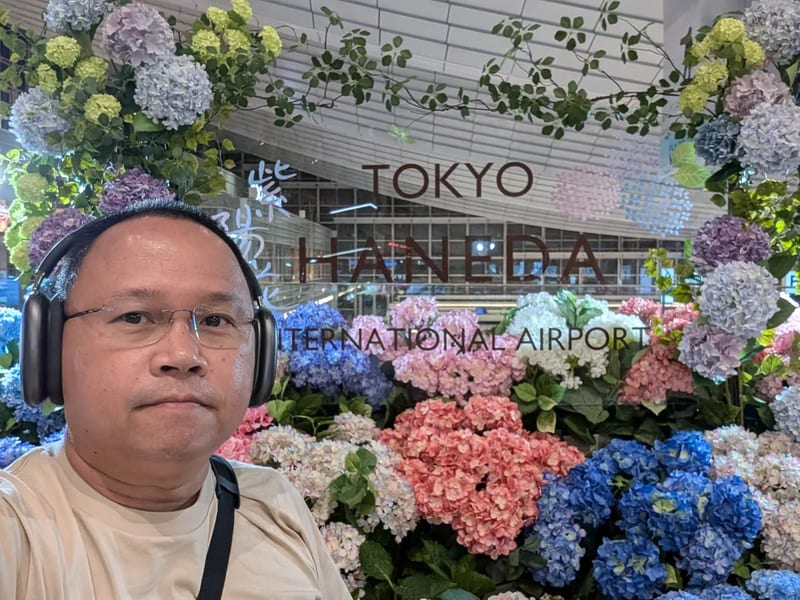
We got to Haneda Airport in Tokyo with about six hours until our 1:30 AM flight. Way too early, and also exactly right, because there was nothing else to do.
Waiting at Haneda, and the Upgrade Bid
Here’s something worth knowing if you fly economy and occasionally want something better: many airlines run a bidding system for upgrades. You set a maximum bid, they notify you 24–48 hours before the flight, and if you win, you pay what they accept. It’s not the full published business class price, just what the airline needs to fill the seat at the margin.
We’d been bidding on this system since we found out about it. We win about 85% of the time. This flight, the winning bid came to around $200 per person over economy. Our base tickets from Manila to Tokyo were in the $300–$400 range, one of the reasons we routed this way. Flying Japan from Manila is significantly cheaper than flying from LAX, which is part of why this Japan detour during the Philippines trip made sense financially.
The Chase Sapphire Preferred® / Reserve® helps here too: no foreign transaction fees on any of the Japanese spending, the points stack up on a trip like this, and the card now covers up to $120 toward TSA PreCheck or Global Entry every four years.
Check-in didn’t open until two hours before departure, which meant we were sitting in the terminal with lounge access we couldn’t use yet. There was a third-floor observation deck, so we went up. Still damp from the earlier rain, but the planes were visible and the kids had something to look at.
The Lounge
Once check-in opened, security at Haneda was the smoothest I’ve experienced anywhere. Facial recognition, passport scan, no laptop out, no belt off (low-top shoes). I still don’t know why TSA in the US can’t manage this, though if you have Global Entry or TSA PreCheck, domestic security gets a lot more bearable. We were through in minutes.
The lounge had real food: takoyaki, stir-fried noodles, inari sushi, rice balls, deep-fried chicken, steamed corn. Not airplane food. Actual food. I ate well. It was nearly midnight by this point and I was not going to board a red-eye hungry.
Business Class, Row One
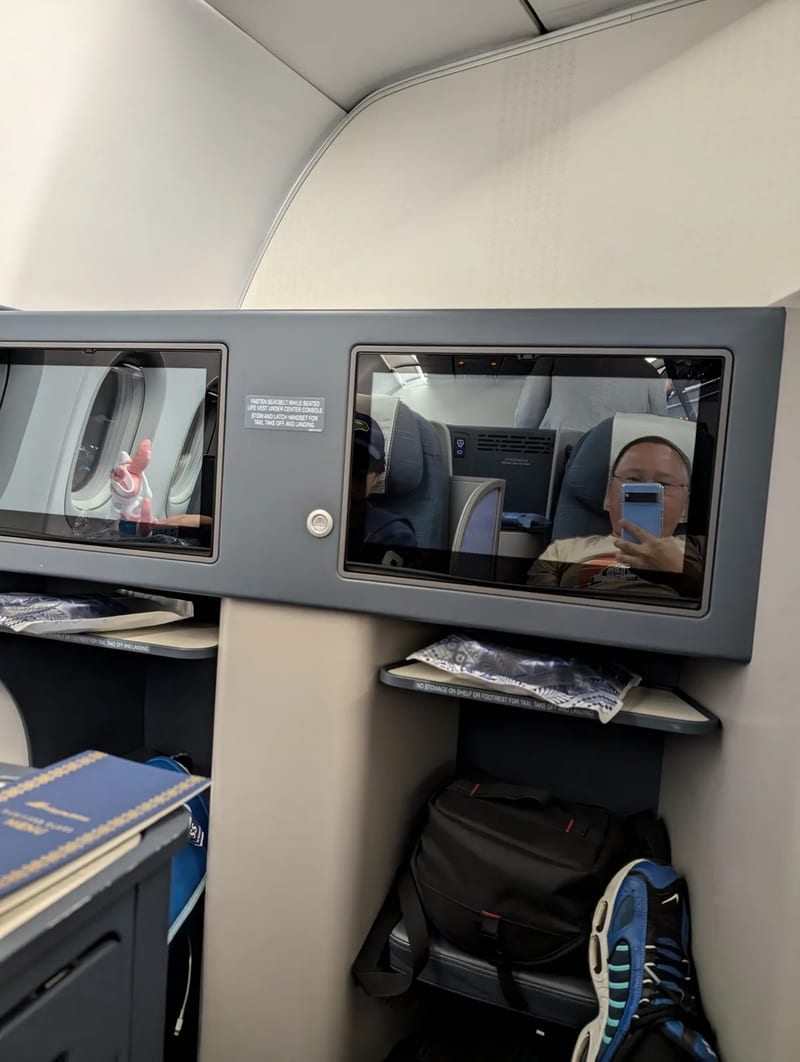
We boarded around 1 AM. First row of business class.
Wide seats, personal screens, legroom that made sense. I had every intention of staying awake to appreciate it. I ordered coffee. The turbulence had different plans. It was rough the whole way and I kept waking up every time we hit a pocket. The food was okay, some kind of chicken dish, nothing to write home about. The seats, though: the seats were worth the $200.
We landed in Manila, Philippines at 5 AM. Humid the moment the doors opened. The kind of heat that reminds you Japan has genuinely good weather for travel.
That’s the Japan 2024 Series
Nine days. Osaka to Nara to Tokyo. Temples, ramen, JDM cars, Mount Fuji, Senso-ji, a life-size Gundam, a Sony camera, omakase sushi, and an airport upgrade.
If you’re just finding this, the series started with landing at Kansai Airport and walking Dotonbori at night. Every episode is in the Japan 2024 series navigation below.
Watch the Full Video
Video Chapters
Get Travel Updates
New stories and tips, straight to your inbox.
Sherwin Martin
Family man, traveler, and content creator. I explore the world with my wife Abby and our boys. We capture road trips, theme parks, and international adventures along the way.
Follow on YouTube
Join the conversation
Comments come straight to me rather than posting publicly, and I read every one. Your email is never published.