
Day two in Osaka, Japan. If you missed the first day (arriving at Kansai Airport, Dotonbori at dusk, and Kura revolving sushi), start there first.
This morning kicked off with the hotel breakfast buffet at Sotetsu Grand Fresa. Fish, omelets, noodles, not what I’m used to for breakfast, but in Japan everything is interesting and everything is good. We ate fast because we had a full day booked.
The Private Tour
Instead of joining a group tour, we hired a private guide for the day through Kai Japan Travel and Tours. Ten hours, six people, a customizable itinerary: ¥47,000 (about $300 total). That works out to $50 a person for a full day with a driver, guide, and a private van. We chose our own stops and didn’t have to keep pace with anyone else’s schedule. Highly recommend this approach if you’re traveling with family or a group.
The van was a Toyota Voxy hybrid. Plenty of room for seven people and gear, surprisingly fuel-efficient, and the controls are straightforward even with right-hand drive. On the way out I was already watching cars out the window: Suzuki Move, Corolla Touring hatchback, a G-Wagon. Japan doesn’t miss.
Stop 1: Shitennoji Temple, Osaka
Shitennoji Temple is one of Japan’s oldest temples, founded in 593 AD. It’s right in the middle of the city and easy to miss if you’re only doing the big tourist stops, but our guide brought us here first and I’m glad they did.
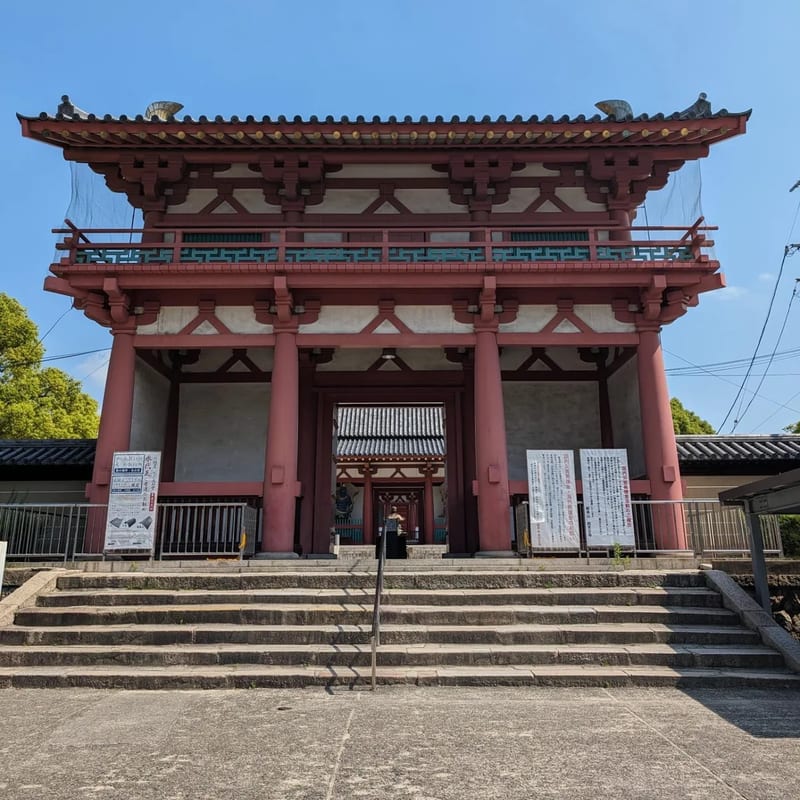
The complex is well-organized with QR code audio guides in multiple languages. You can scan as you walk through each section and get the full history. It’s the kind of place where you wish you had more time.
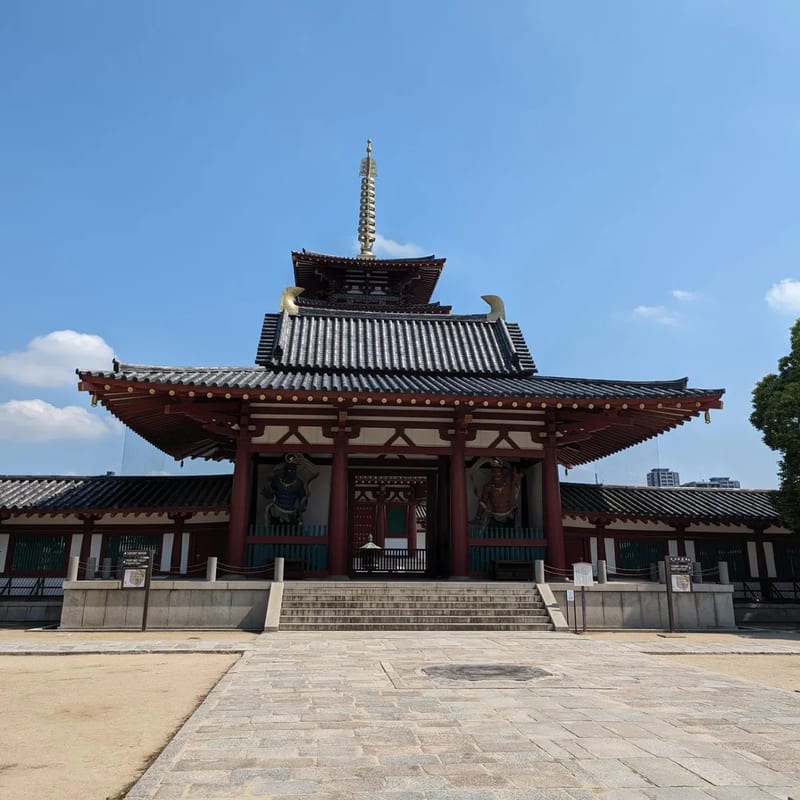
The inner sanctum is beautiful, but no photos or videos inside, and no hats. So you just have to go in and actually look. We spent about 20 minutes here before moving on.
Stop 2: Osaka Castle
From Shitennoji we headed to Osaka Castle. In the middle of a major city, there’s a 400-year-old castle surrounded by a moat, stone walls, and a public park. It’s one of those moments where you stop and realize Japan does preservation differently.
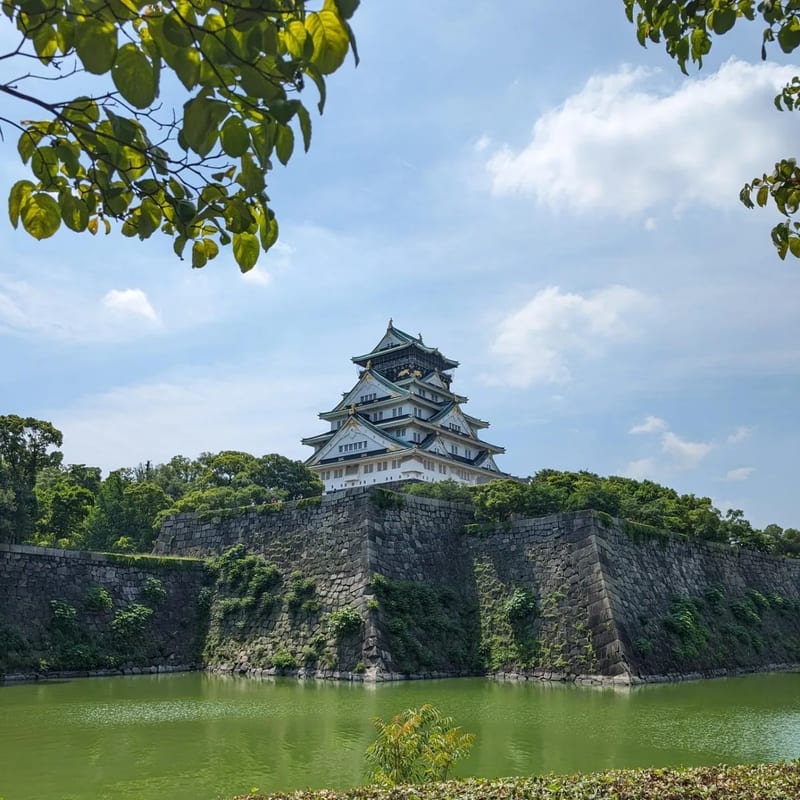
The moat is massive and the stone walls are immaculate. You can see the castle from a long way out, but getting right up to the edge of the moat and seeing the full scale of it is something else.
They also have boat tours on the moat. We didn’t have time for that on this trip but it looked great. The castle grounds are enormous and you could easily spend a half day just walking the park.
Stop 3: Umeda Sky Building
The Umeda Sky Building is a 40-floor twin-tower skyscraper with a floating garden observatory connecting the two towers at the top. It looks unlike anything I’d seen before in person.
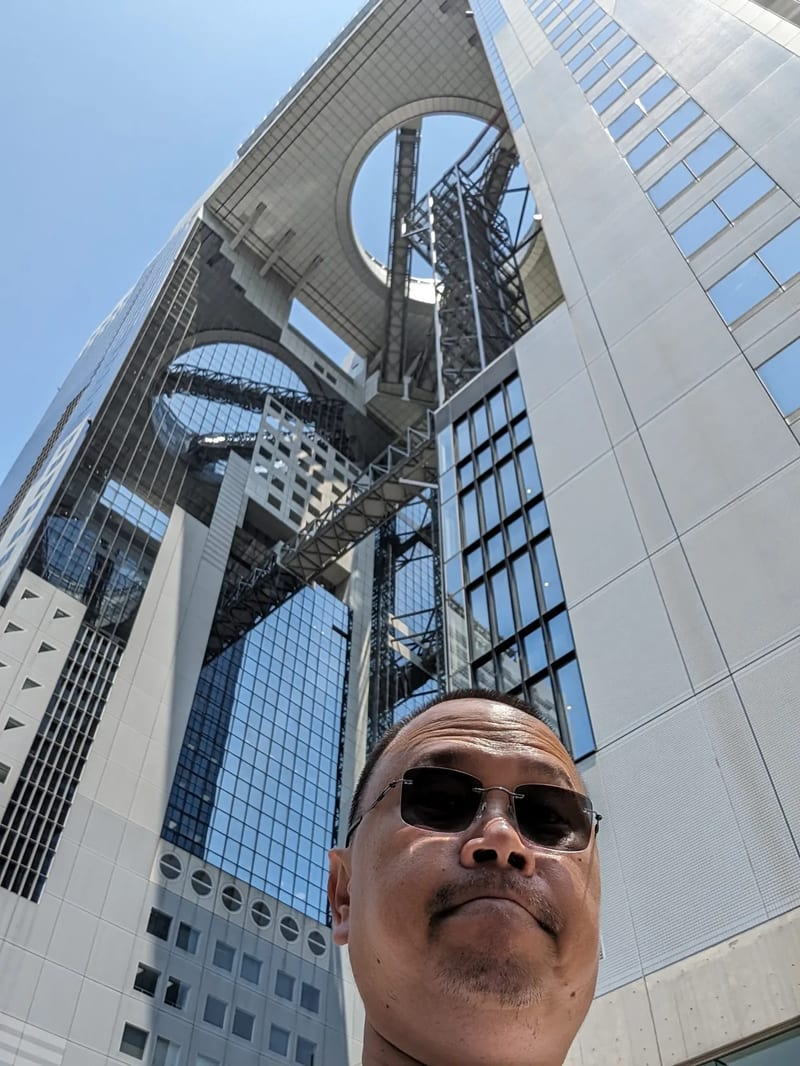
Entry is ¥1,500 for adults (about $10) and ¥700 for kids ages 4–12 (about $5). You take an escalator up inside the crossbeam connecting the two towers, which is already a little alarming if you’re not great with heights. I am not great with heights.
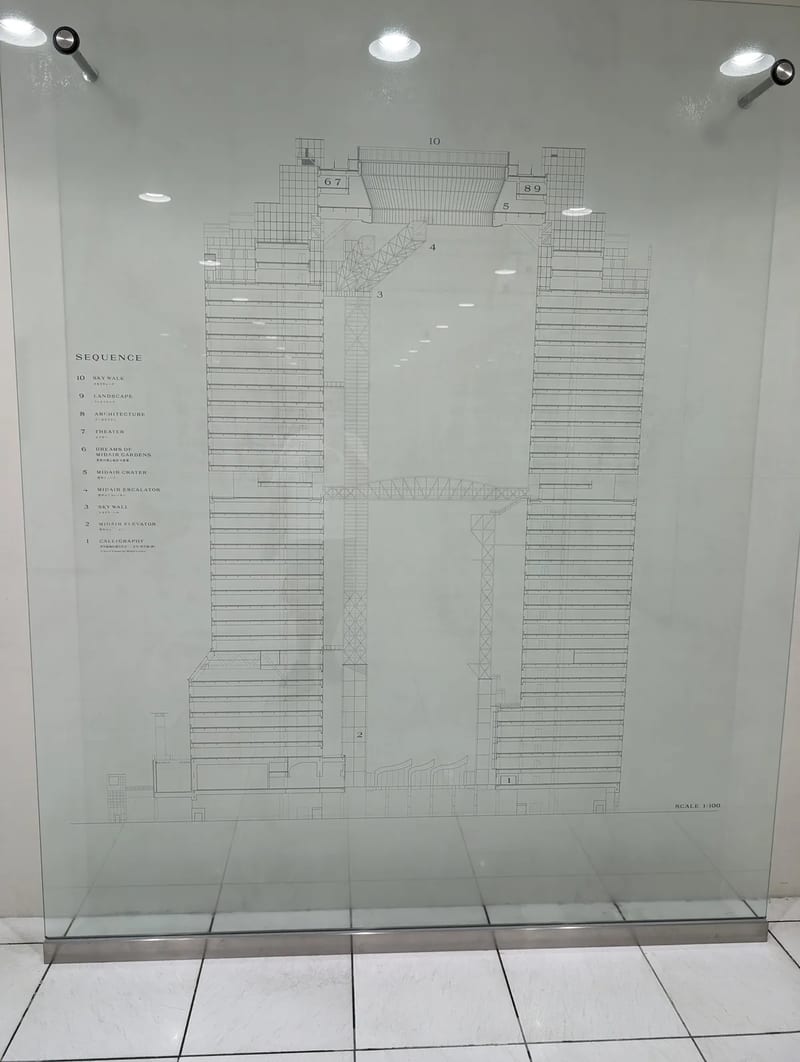
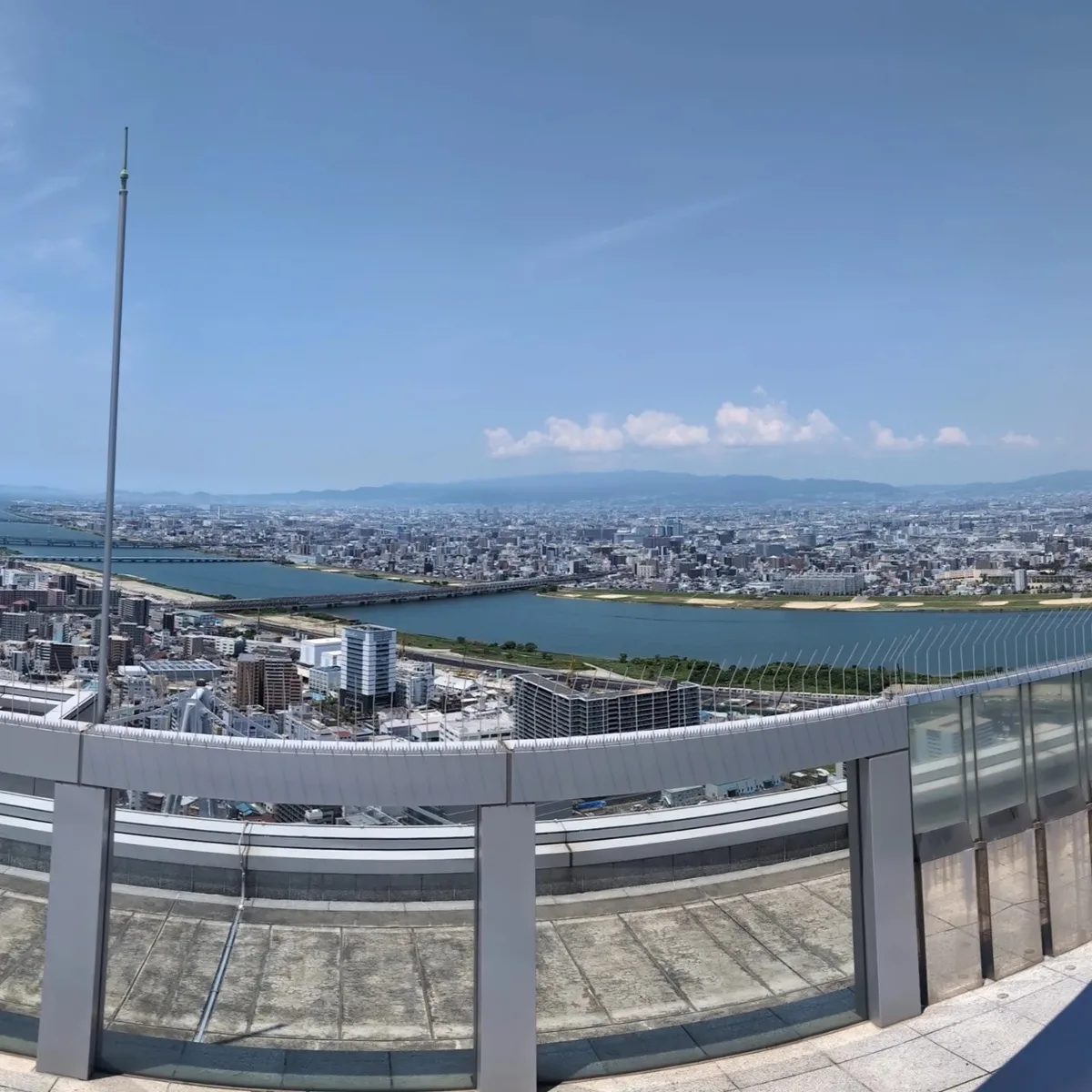
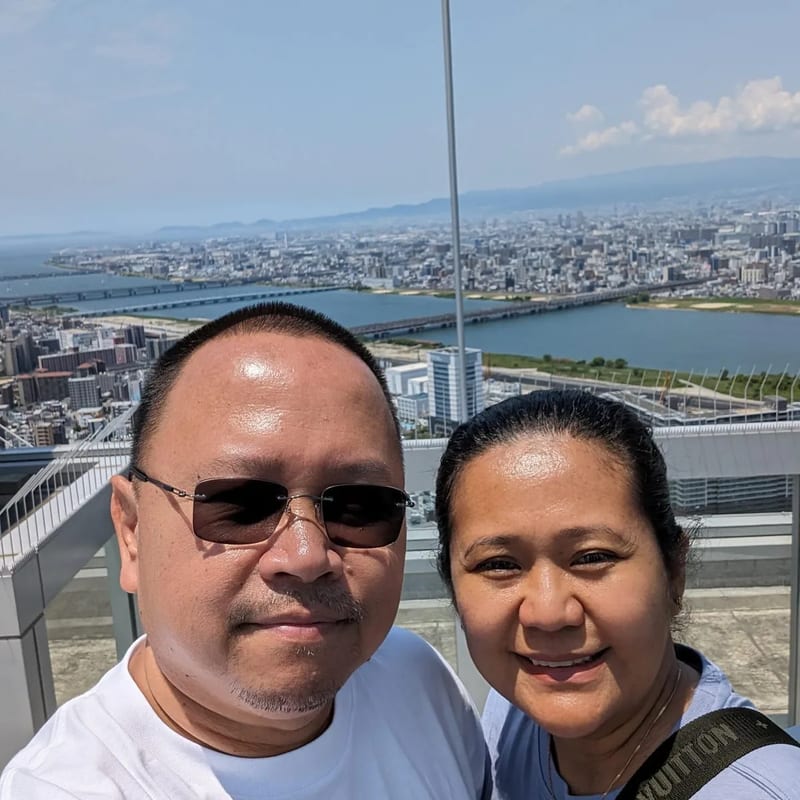
Once you’re at the observation floor, the enclosed deck has 360° floor-to-ceiling windows and a panoramic view of Osaka, Japan that stretches all the way to the mountains.
From there, stairs take you up to the open-air Skywalk, the absolute top of the building, completely outdoors. That’s where the real view is.
There’s a love lock railing up here. People buy locks and attach them. Kind of a universal travel thing at this point, but the setting makes it feel right. There are also vending machines up on the Skywalk, which I thought was a joke until I saw them.
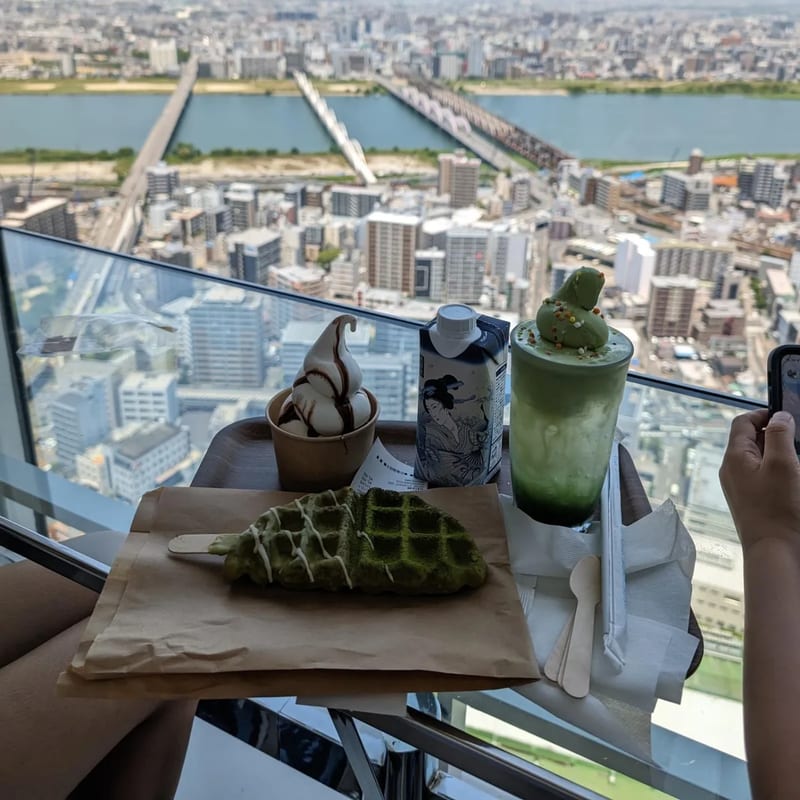
Back inside on the observation floor there’s a cafe. We got matcha: matcha cream soda and a matcha croffle (that’s a crunchy croissant-waffle hybrid, and yes it’s as good as it sounds). Eating matcha desserts 40 floors above Osaka, Japan is a solid afternoon.
Lunch: Onigiri Gorichan
For lunch we stopped at Onigiri Gorichan, a dedicated onigiri restaurant with a gorilla mascot and a menu that’s exactly as focused and excellent as you’d want.
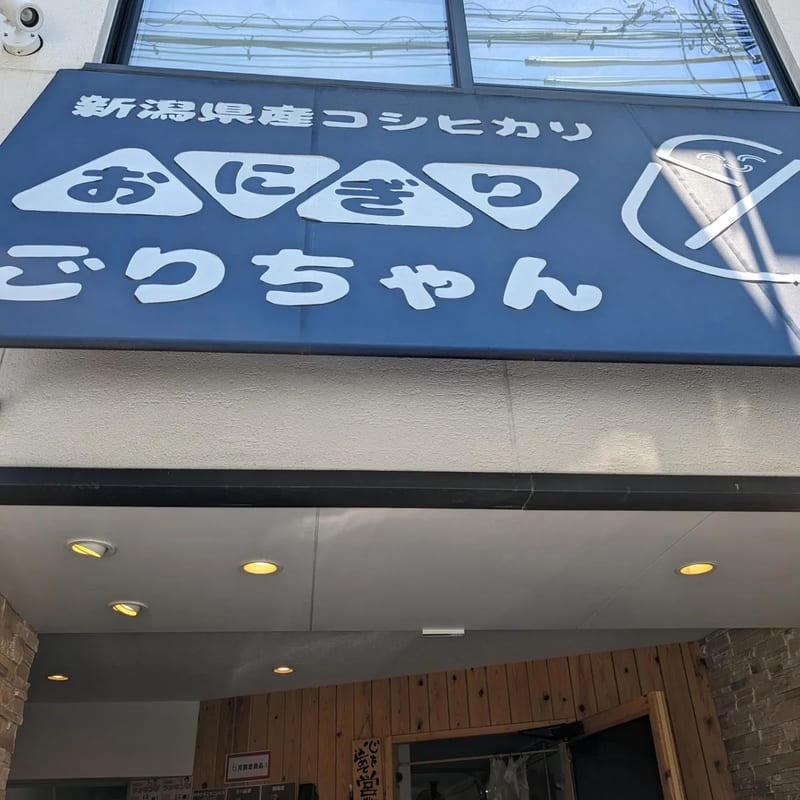
Onigiri here is not the plastic-wrapped triangle you grab at a convenience store. It’s freshly made, different fillings and toppings, miso soup on the side. We ran Google Translate on the menu to figure out what we were ordering, which is part of the experience.
Quick side note on the parking situation here: the lot we pulled into had a metal plate clamp on the car that releases only when you pay at the machine. Not a boot, not a ticket. The car is physically held until you settle up. Genius. I’d been to this restaurant specifically because of the TripAdvisor reviews, and the food lived up.
Cup Noodles Museum, Osaka
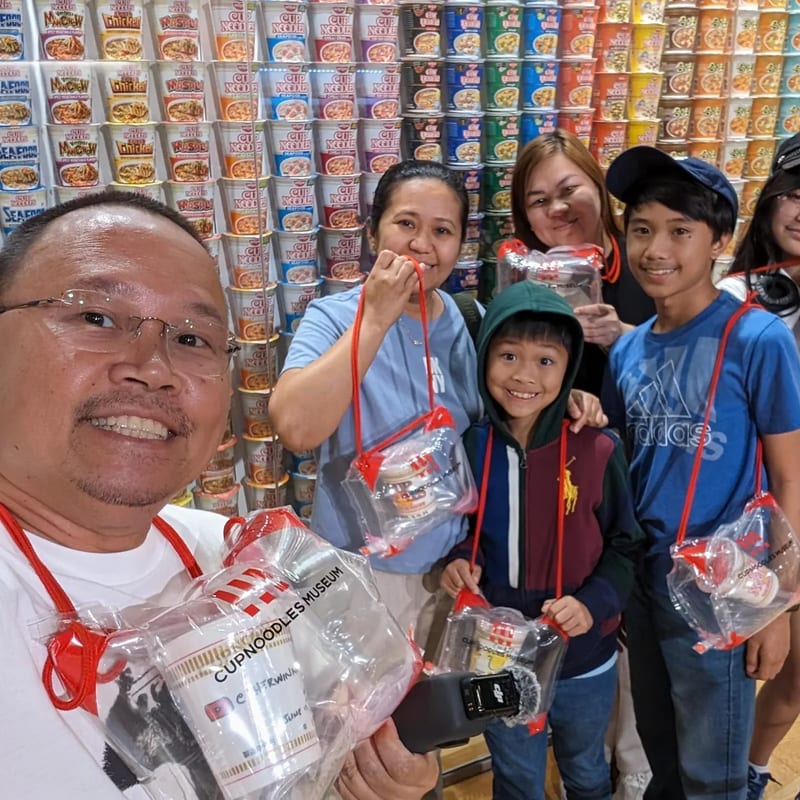
After lunch: the Cup Noodles Museum. This is the birthplace of instant noodles. Momofuku Ando invented them in Ikeda, Osaka, Japan in 1958. The museum is part history lesson, part hands-on workshop, and completely worth it if you have kids.
The main event is the My Cup Noodles Factory. You buy a blank cup, decorate it yourself, then move through the line choosing your soup base and toppings. The cup gets heat-sealed on the spot and inflated with an air bag for protection. You walk out holding your own custom cup of noodles.
Osaka Shinsekai and the Pringles Store
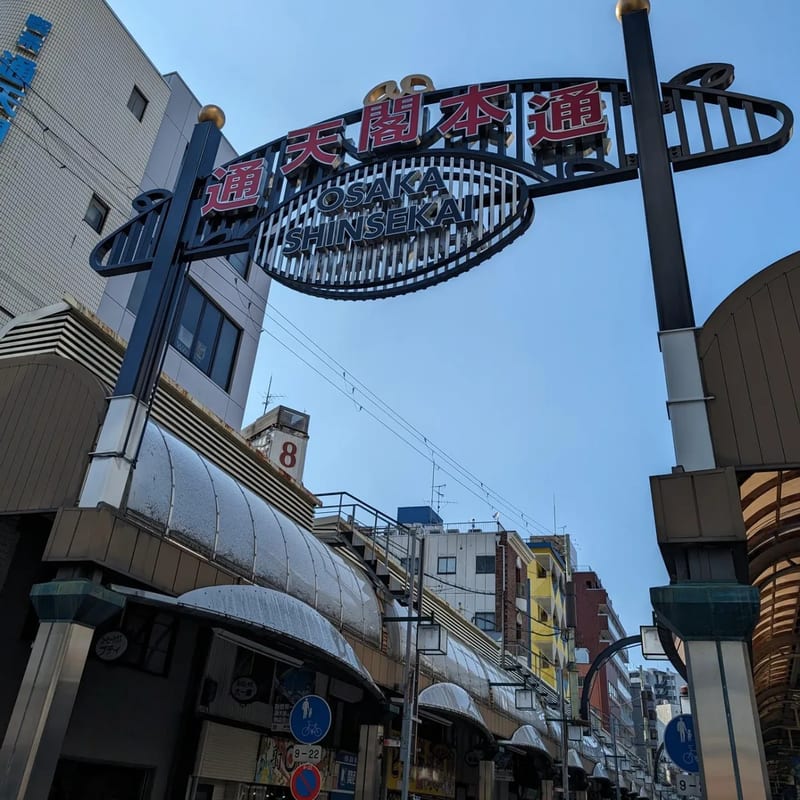
Late afternoon we drove through Shinsekai, an older entertainment district in Osaka, Japan built in the early 1900s, designed to mimic Paris and New York. It has a very different vibe from Dotonbori: older signage, retro architecture, still very alive.
We stumbled into a Pringles store (a dedicated Pringles store) and found flavors that do not exist in the US. Takoyaki Pringles. Grilled scallop. Sour cream and onion in mini format. A Pringles gashapon machine where you put in coins and get a random Pringles capsule. I don’t know who approved all this but it was correct.
Nearby is Tsutenkaku Tower, the old symbol of Shinsekai. We didn’t go up (it was getting late), but walking that area at golden hour is worth doing just for the atmosphere.
One Thing I Didn’t Find
Earlier in the day we ducked into a multi-floor secondhand electronics and anime district: figurines, video games, DVDs, old consoles. I was hunting for a Sony A7 IV. I’d had one on loan for about a month, returned it when it didn’t fit the budget, and figured: Sony is from Japan, maybe there’s a secondhand deal here that makes sense. No luck. The gray market for used Sony bodies in Japan is real, but we were moving too fast to find the right shop. Still thinking about it.
Ten Hours, One Day
A full private tour day in Osaka, Japan ran us ¥47,000 split six ways, about $300 total or $50 per person. That covered driving, guiding, and a fully custom itinerary for 10 hours. For a family that doesn’t want to speed-walk with 30 strangers, it’s the move.
If you’re planning a Japan trip and need a card that won’t charge you conversion fees on every yen transaction, the Chase Sapphire Preferred® or Reserve® is what I use: no foreign transaction fees, earns points on travel and dining, and has trip protection built in.
Watch the Full Video
Video Chapters
Get Travel Updates
New stories and tips, straight to your inbox.
Sherwin Martin
Family man, traveler, and content creator. I explore the world with my wife Abby and our boys. We capture road trips, theme parks, and international adventures along the way.
Follow on YouTube
Join the conversation
Comments come straight to me rather than posting publicly, and I read every one. Your email is never published.