
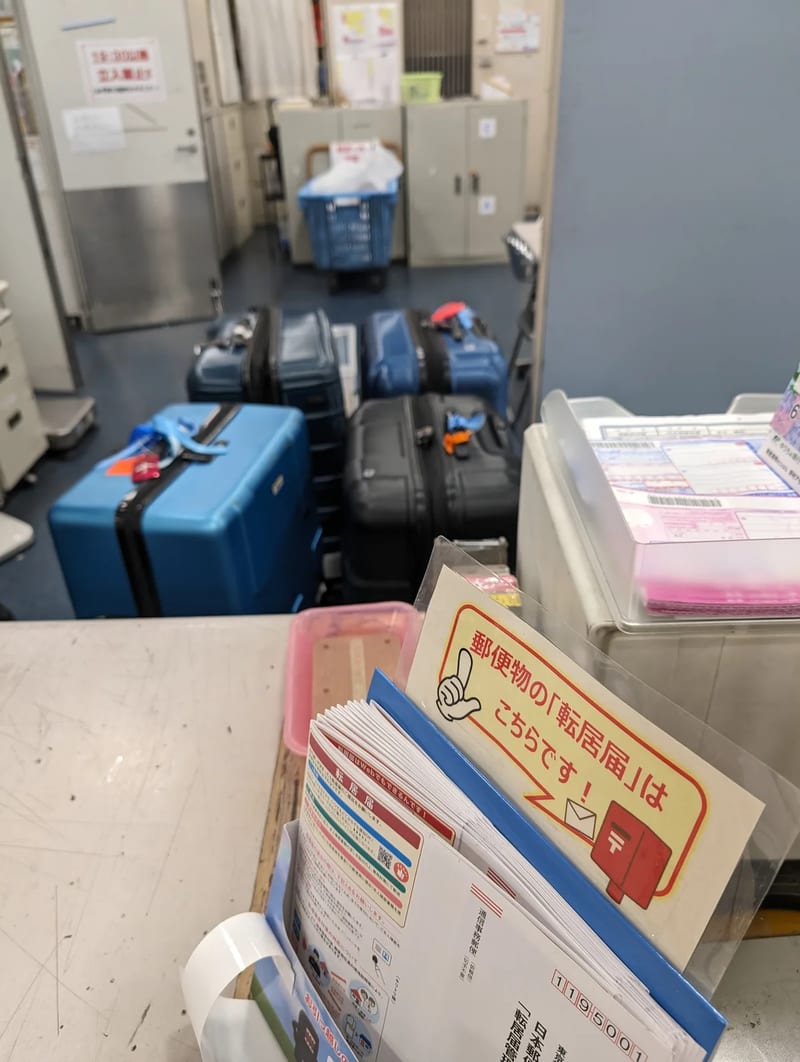
We started the day at the Nara, Japan post office, not the most glamorous opening to a travel day, but one of the smartest moves of the whole trip. We were heading to Tokyo the next morning, and instead of hauling four suitcases packed with souvenirs through the train system, we shipped them directly to the hotel. Four bags, about 9,700 yen, roughly $62. Less than $16 per bag to have your luggage waiting at the front desk when you arrive. Japan makes this incredibly easy, and once you do it once, you wonder why you’d ever travel any other way.
With the bags taken care of, our driver pulled up in a Toyota Voxy, Japan’s answer to the minivan, though “minivan” doesn’t quite do it justice. It’s smaller than what we have in the US, closer to a station wagon in size, but with the tall roofline, sliding doors, and clever use of space that makes you realize how overbuilt American vehicles really are. I kept noticing this all week: the roads here are narrower, the cars are smaller, and everything just… works. Lots of Priuses everywhere, multiple generations running together on the same streets. I spotted two Teslas over two days, which felt almost exotic by comparison.
Nara Park, Nara, Japan: The Deer Are Not Afraid of You
Nara Park is one of those places that feels almost unreal when you’re standing in it. The deer don’t run from you. They don’t wait to be called. They just exist alongside the tourists, wandering the paved paths, grazing near temple gates, occasionally trying to eat whatever you’re carrying. There are vendors selling flat rice crackers specifically meant for the deer, and if you’re holding one, the deer will find you.
The kids were in their element: feeding the deer, photographing them, watching a few try to nibble on bags and sleeves. One walked up with full antlers, which was a different experience. Those things are big up close. The whole scene has this relaxed, slightly absurd energy: ancient temple gates in the background, deer weaving through the crowd like they own the place, because historically they kind of do. The sika deer of Nara have been considered sacred messengers since the 8th century.
Todaiji Temple, Nara, Japan: Bigger Than It Looks in Photos
From the deer park, we walked toward Todaiji. The approach alone is worth it: a long wide path lined with stone lanterns, deer wandering on both sides, and then the Nandaimon Gate rising ahead of you with two towering Nio guardian statues, one on each side. These things are massive and imposing in the best way. I don’t know who the architect was, but I want to commission something.
Admission to the Great Buddha Hall is 800 yen for adults, 400 yen for children 6–12. One important note: cash only. No credit card, no IC card. This came up repeatedly at the bigger historic sites, so make sure you have yen on you before you go. Once you’re inside the Daibutsuden, the scale of the main hall hits you differently than any photo prepares you for. And then you see the Buddha itself, nearly 15 meters tall, cast in bronze in the 8th century.
No tripods allowed, but personal photos are fine. Take as many as you want.
Ramen Lunch in Kyoto, Japan: Zundoya
After Todaiji we crossed into Kyoto, Kyoto Prefecture, Japan, and stopped at Zundoya for ramen. Tonkotsu broth: rich, a little salty, and you can dial in the thickness. They bring a pitcher of water to the table automatically without you asking. Something so simple, but I kept noticing it at every restaurant. Japan just handles the basics well.
The no-tipping culture here is also worth acknowledging. The service was genuinely excellent (attentive, efficient, friendly), and tipping isn’t just uncommon, it’s considered rude. You’d think that would lower the quality of service. The opposite is true. Every restaurant we went to operated at a level that most American restaurants can’t match.
Arashiyama Bamboo Grove, Kyoto, Japan
From lunch we headed west to Arashiyama. Our driver knew which entrance to use, not the main tourist choke point but a quieter upper section that gave us the full experience without fighting through the crowd. Both sides of the path are bamboo, tight together, growing 20 meters overhead. The light filters through in a way that photographs just barely capture.
It was about 31°C. Having a local driving us around made a real difference, not just for navigation but for knowing which spots to prioritize and which entrances to use. If you’re doing Japan on your own, Google Maps handles the basics well (our Google Fi plan worked perfectly the whole trip: no setup, just landed and had data), but a local guide is a different level.
Kinkakuji, the Golden Temple, Kyoto, Japan
I’m going to share something from Kinkakuji that I included in the video, and you can judge for yourself.
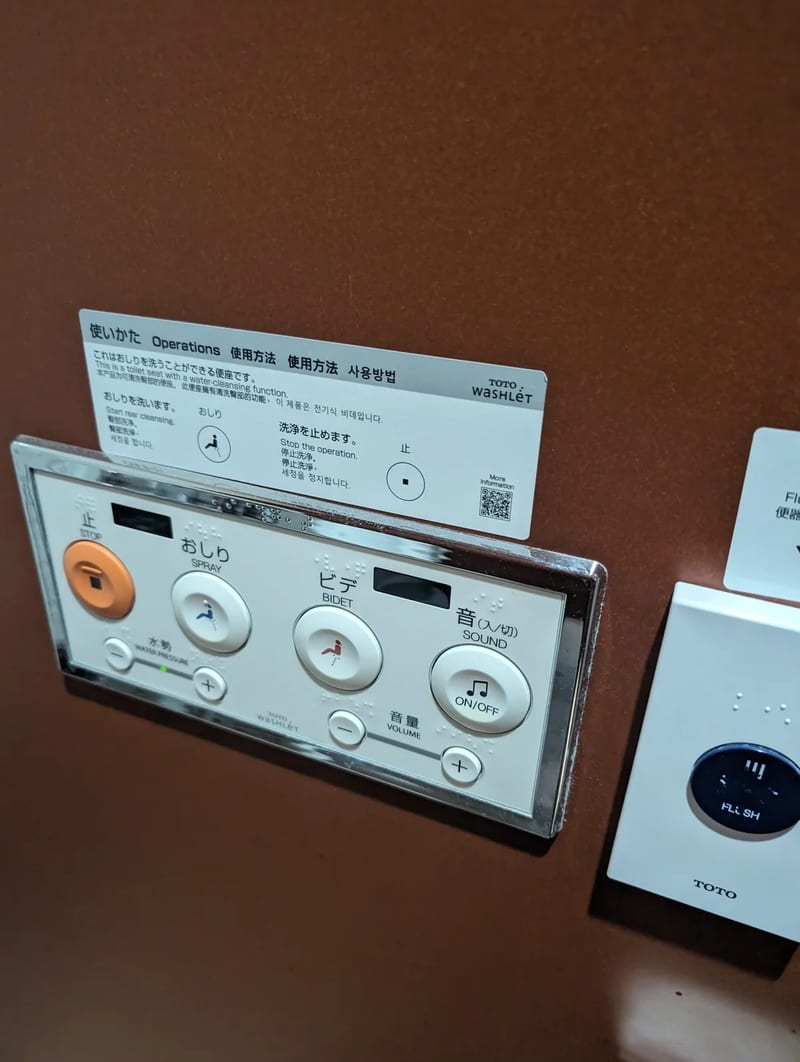
The restrooms at Kinkakuji are outstanding. I had to use one for some personal business, and I can report: clean, calm, with ambient music you can switch on. Every stall has a Toto Washlet bidet. I have now used Japanese bathrooms enough times on this trip that American restrooms are going to feel like a downgrade for the foreseeable future.
Okay. Now the actual temple.
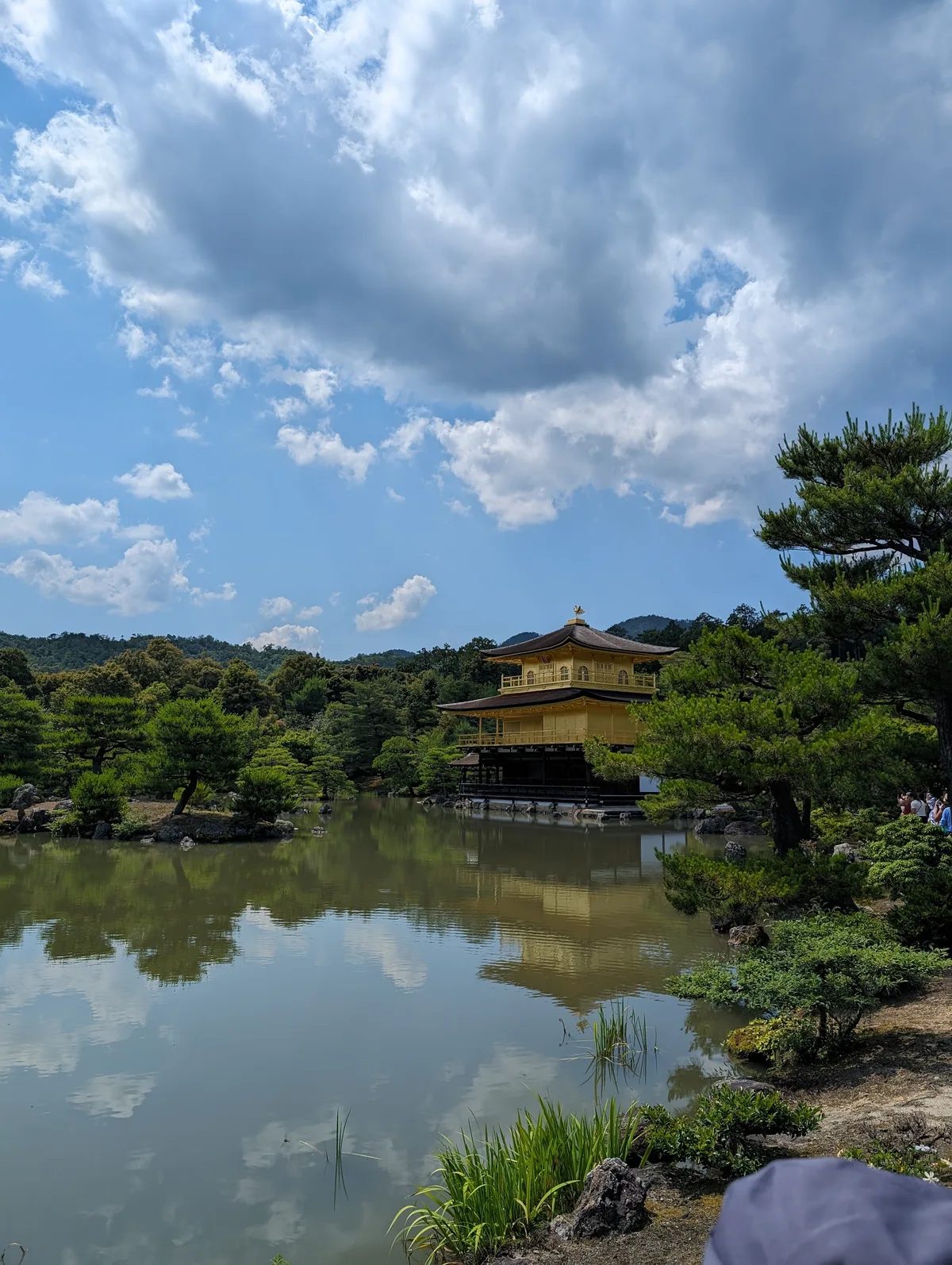
Admission is 500 yen for adults, 300 yen for children 7–15. Cash only again. The Golden Pavilion (Kinkakuji) is exactly what it looks like in photos, which is the highest compliment I can give. The top two floors are covered in gold leaf. It reflects in the Kyoko-chi Pond below. The garden surrounding it is immaculate. Whatever you’re imagining, it’s that.
Personal photography is allowed throughout. No tripods, and no commercial use. I double-checked using Google Translate when I couldn’t read the sign at one of the inner areas.
Hanami-koji and the Kyoto Starbucks, Kyoto, Japan
After Kinkakuji we stopped briefly at Hanami-koji, one of Kyoto’s historic preserved streets. The traditional wooden buildings are intact and atmospheric. I could have walked this for an hour. Our stop was the famous Starbucks in the old machiya townhouse building. It doesn’t look like any other Starbucks. The facade is traditional wood, and inside people are seated on tatami. They carry a Kyoto-exclusive “Been There” series cup.
One note for Hanami-koji: photography is restricted on private roads in the geisha district. There are signs. Respect them.
Fushimi Inari Taisha, Kyoto, Japan
From Hanami-koji we went to Fushimi Inari Taisha, the shrine famous for its thousands of bright orange torii gates climbing the mountain. The approach gives you no idea of what’s waiting. You walk through the main hall, wash your hands at the chozuya, step past the incense burner, and then suddenly you’re inside a tunnel of orange.
Each gate is donated by a business or individual, with the donor’s name inscribed on the back. The full trail goes all the way to the summit of Mount Inari, about 4 km each way. We didn’t do the full climb, but even the lower section is worth seeing. Free admission, open 24 hours.
By this point we’d been running hard for two days straight. Feet hurt, everyone was tired in the best possible way.
Wagyu Dinner at Gyu-Kaku, Kyoto, Japan
We ended the day at Gyu-Kaku. Yes, we have Gyu-Kaku in the US too, but we wanted to try actual wagyu beef in Japan, and a familiar spot felt right at the end of a long day. Six of us went, ordered multiple rounds including the premium wagyu, and the bill came out to $84 total. The marbling on the wagyu was something else.
We sat on the lower floor, which meant shoes off at the entrance. Something I didn’t expect from a chain restaurant. The service (as with every place we went in Japan) was exceptional. I wanted to leave a tip. You’re not supposed to. I still wanted to.
A Few Japan Travel Notes
After two full days of this kind of touring, some practical things worth passing along:
Luggage forwarding is real and worth using. You can ship bags between hotels for very reasonable fees. The post office and most convenience stores handle it. Book it the night before to guarantee same-day delivery.
Bring cash. Several major attractions (Todaiji, Kinkakuji) are cash only at the ticket booth. ATMs are everywhere, and 7-Eleven ATMs reliably accept foreign cards. Chase Sapphire covers foreign transaction fees, which helps on everything else, but you’ll still need yen for the cash-only spots.
Get a local guide for at least one day. The difference in experience is significant, not just for transportation but for knowing the quieter entrances, the less-crowded times, and which parts of an attraction are actually worth your time.
Google Translate camera mode. Point it at a sign and it overlays the translation in real time. Indispensable.
If you’re planning a Japan trip and want to see how this day fit into the rest of our itinerary, check out our first day in Osaka and Osaka day two. The Nara and Kyoto combination makes for one full, satisfying day. Next up: we take the Shinkansen bullet train from Osaka to Tokyo and spend the evening in Shibuya.
Some links in this post are affiliate or referral links. If you use them, we may earn a small commission at no extra cost to you, and it helps keep this site running. See our disclosure for details.
Watch the Full Video
Video Chapters
Get Travel Updates
New stories and tips, straight to your inbox.
Sherwin Martin
Family man, traveler, and content creator. I explore the world with my wife Abby and our boys. We capture road trips, theme parks, and international adventures along the way.
Follow on YouTube
Join the conversation
Comments come straight to me rather than posting publicly, and I read every one. Your email is never published.