
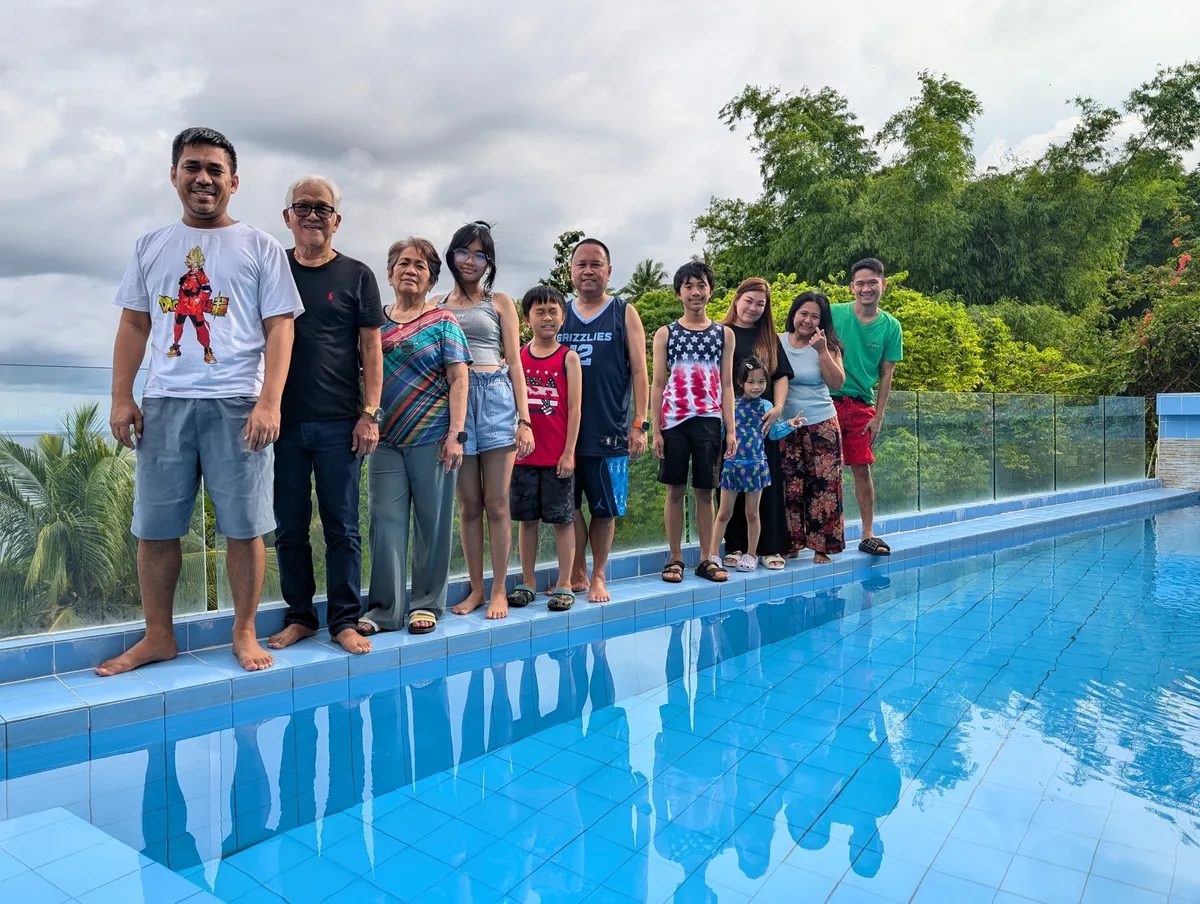
Eleven people, two cars, and roads that Google Maps found a creative way to make worse. That’s how we arrived at Casa Amara, a cliffside villa in Batangas, Philippines, for three days and two nights.
Getting There
The first sign is an arched stone gate at the road. Understated. Nothing about it tells you what’s coming.
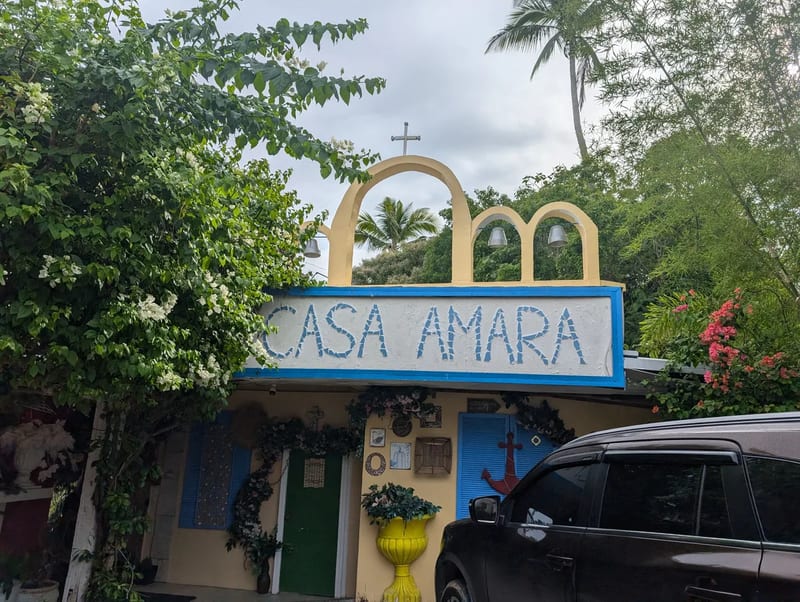
Getting here meant navigating roads that weren’t designed for large vehicles. We had a Hyundai Starex and an Isuzu MUX for the eleven of us. Google Maps offered a shortcut. The shortcut was difficult, not the surface, just the grade and the turns. We made it.
The first thing I saw when I stepped out wasn’t the villa. It was this:
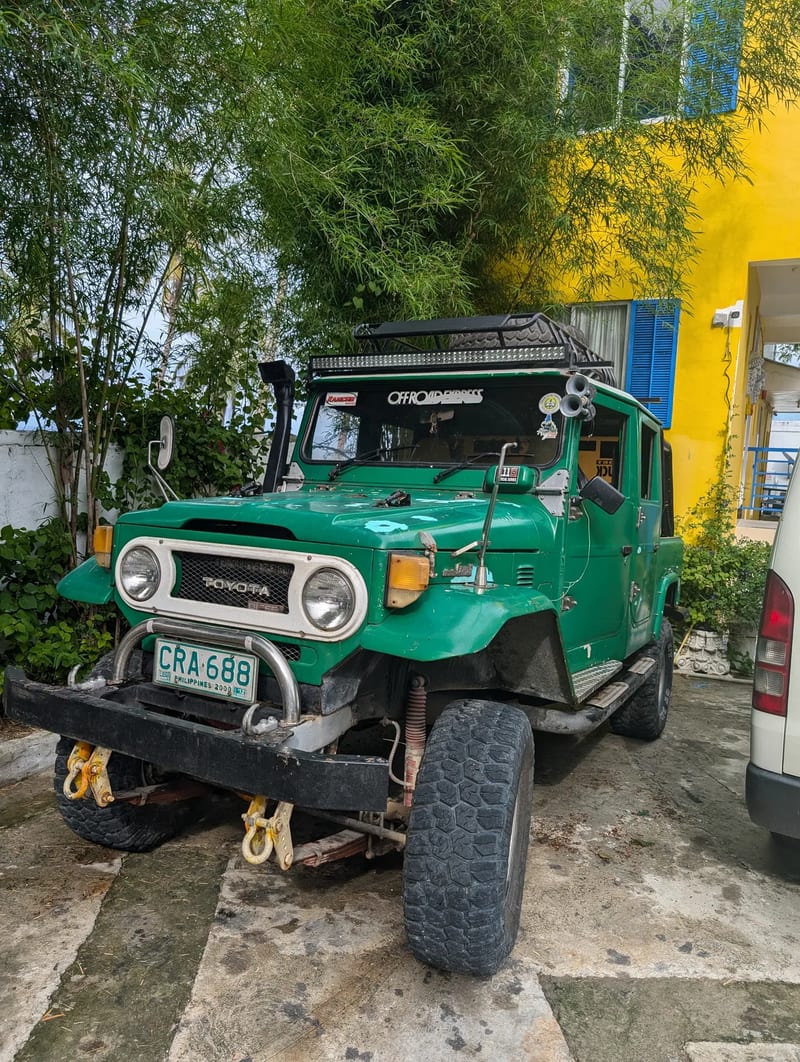
A heavily modified vintage Toyota Land Cruiser 70 Series, circa 1978–1982. Roof rack, snorkel, large off-road tires, bright green paint. I ran a Google Lens scan to confirm, a proper classic. This vehicle was going to matter later in the trip.
The Villa
Getting to our level meant taking steps down. Several flights, with the ocean expanding into view at each landing. The property is built into the cliff: the lower you descend, the better it gets.
The jacuzzi at our level faces directly out over the water. Whatever you’re picturing, it’s larger, and the view is exactly what it looks like in the photos. I stood there for a moment and said nothing.
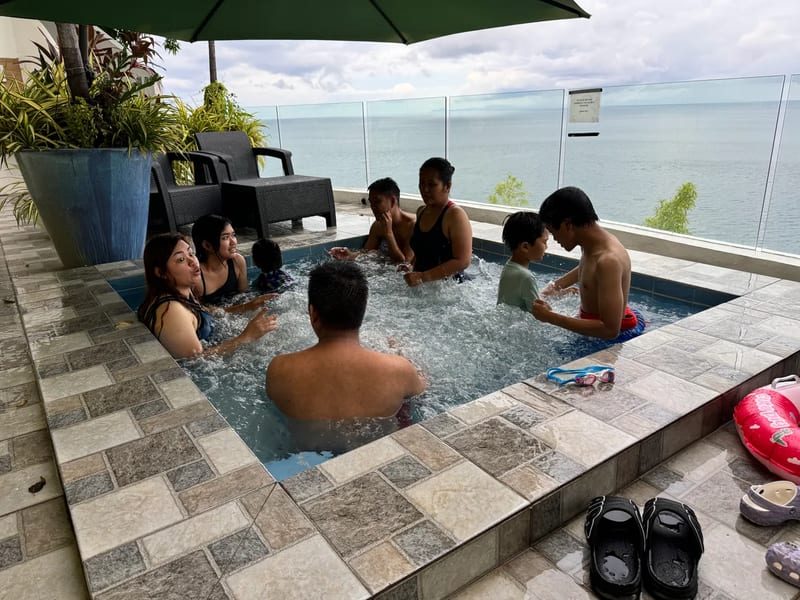
Worth knowing: the jacuzzi is not heated. It runs cold, colder than the pool, actually, because the pool sits in full sun all day and warms up. Not a deal-breaker, but if a hot soak is the point, this isn’t the place for it.
Past the jacuzzi is a long dining table, then the sliding door into the rooms, then steps up to the private pool. The pool had a waterfall feature that wasn’t running when we arrived; staff said they could set it up if we wanted. We didn’t need it. The pool is fully enclosed to our rental, and it overlooks the same ocean as everything else on this property.
The rooms: a ground floor with a kitchen, dining area, one bed, and a bathroom. Upstairs has two beds, a couch, and a sliding door that opens directly onto the pool deck. First morning, I came out that door and jumped straight in.
Pricing: ₱96,000 for three days and two nights, all meals included: breakfast, lunch, and dinner. Given how remote this place is (no nearby stores, rough access roads), the all-inclusive package isn’t just convenient, it’s necessary. The conversion works out reasonably well for what you’re getting.
Cell coverage at Casa Amara is essentially nonexistent. Every carrier was spotty to nothing. They provide Wi-Fi, which worked fine for messaging and light browsing.
Breakfast
Every morning, the staff set up a table outside the rooms. Facing the ocean.
Rice, eggs, fruit, standard Filipino breakfast. The setting turns it into something else. Birds in the trees, waves below, a breeze off the water. You could serve the same meal in an ordinary kitchen and barely register it. Here, it becomes the best part of the morning.
The Beach Hike
The property has a shuttle to the beach, a free Land Cruiser run, down the trail and back. The staff confirmed it. We were ready to go.
Then the Land Cruiser wouldn’t start. Dead battery.
We hiked.
I’m 45, my knee was already complaining after nine days in Japan, and the trail down to the beach in Batangas in June is not a gentle nature walk. It’s steep. Rain runoff has carved sections down into gullies half a meter deep. Sharp switchbacks. Minimal shade. Grades that, on some stretches, I’d put at 20–25 percent or steeper. Sandbags are stacked in the worst spots to keep the edges from collapsing further.
I filmed it on the way down with the DJI Osmo Pocket 3, good thing, because trying to hold a larger camera while watching your footing on a trail like that wasn’t happening. The Pocket 3 stays stable, doesn’t weigh anything, and handles heat without complaint. I was less composed.
The Beach
At the bottom: a pebble and stone beach on the South China Sea. High tide when we arrived, so the waterline was close and the dry beach was narrow. The water was clear.
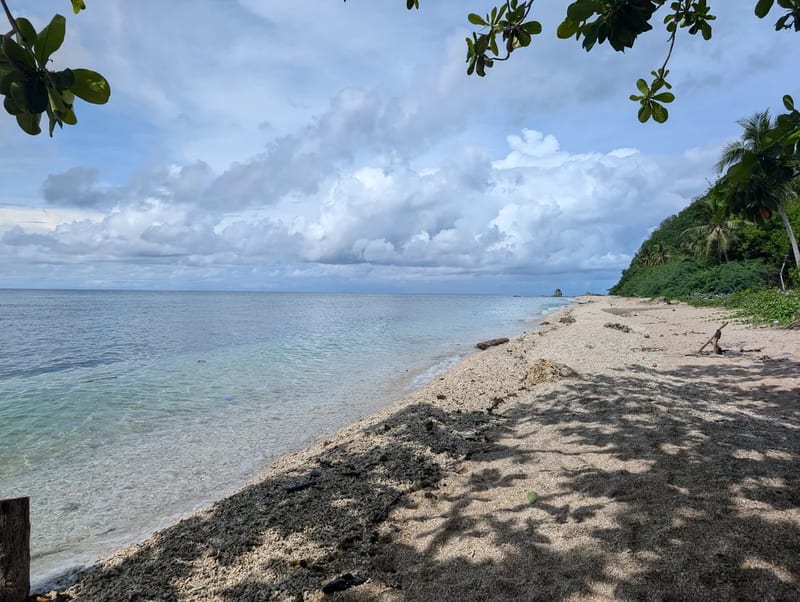
This is the same water you can see from the villa. Standing here and looking back up at the cliff, you can trace the exact point where your room is. It’s a long way up.
For context: Batangas versus Palawan is not a close comparison. The beaches in Palawan (particularly the ones around Port Barton and Roxas) have finer sand and more vivid water. Batangas is still beautiful. Just a different terrain, different feel. If you’ve been to Palawan first, know you’re comparing two different things.
On the hike back up, the Land Cruiser met us halfway. The driver explained that’s as far down as the trail allows the vehicle to go. The lower section is too steep and too narrow. Completely understandable after walking it. Watching a 40-year-old truck navigate a switchback on that grade with a drop on one side takes a different kind of skill.
The Nights
The second evening, a full moon came up over the water. We ate dinner on the patio as the moon’s reflection stretched out across the ocean below.
The dinner our first night was a four-course meal: pita bread to start, then pasta or salad with seafood, then roasted rosemary chicken, then a brownie with ice cream. Not fine-dining territory, more like a well-run kitchen feeding a large group. Which, given the remoteness of the place, was everything we needed.
This is part of the Philippines 2024 series. The last episode covered a 5-star hotel stay in Manila that didn’t go quite as expected. Next up: a behind-the-scenes look at sabong (cockfighting) at a coliseum in Liliw, Laguna. If you’re just finding the series, it started with flying into Manila from Ontario, California.
Watch the Full Video
Get Travel Updates
New stories and tips, straight to your inbox.
Sherwin Martin
Family man, traveler, and content creator. I explore the world with my wife Abby and our boys. We capture road trips, theme parks, and international adventures along the way.
Follow on YouTube
Join the conversation
Comments come straight to me rather than posting publicly, and I read every one. Your email is never published.